Last Updated: September 2026
Most people searching for the best vitamin C tablets for skin in India are hoping a tablet will do what a serum does, and the evidence says it will not, at least not in the same way. A dermatology systematic review found that topical vitamin C, particularly L-ascorbic acid in a low-pH formulation stabilised with vitamin E and ferulic acid, is the most clinically validated route for photoageing and pigmentation. Oral supplementation showed only modest benefits, and those were for texture and wrinkle appearance rather than for tone.
The genuinely surprising part is the dose. In that review, the oral trials that showed improvements in dermal density, texture and wrinkle appearance used eighty milligrams a day over sixteen weeks, particularly alongside collagen peptides, and the photoprotection findings came from antioxidant complexes containing forty to eighty milligrams. Those numbers are roughly the ICMR-NIN requirement for Indian adults, which is eighty milligrams for men and sixty-five for women. They are not a thousand milligrams, which is what the Indian shelf mostly sells.
One point deserves to be stated plainly rather than left implied. The review noted that no direct evidence supports oral vitamin C alone for lightening skin pigmentation in people who are not deficient. Vitamin C is not a fairness tablet, and skin tone is not a health outcome. Where vitamin C genuinely has something to offer is in collagen synthesis, in protecting against oxidative damage, and in supporting the repair of specific pigmentation problems alongside proper treatment.
So this guide ranks what is actually worth buying for skin, explains the glutathione question honestly rather than either selling it or dismissing it, and is clear about where a tablet stops being the right tool. If you have melasma, post-acne marks or sun damage that bothers you, the guide section explains which of those actually respond to what.
Quick Comparison
| Product | Best For | Rating | Link |
|---|---|---|---|
| Limcee Chewable Vitamin C 500mg | Best value, and closest to the studied dose | 4.4 (1,400) | Check Price |
| Carbamide Forte Natural Vitamin C 1000mg with Amla | Best natural option for daily skin support | 4.2 (4,600) | Check Price |
| Carbamide Forte Japanese L-Glutathione with Hyaluronic Acid | Best-reviewed glutathione combination | 4.1 (2,700) | Check Price |
| OZiva Bioactive Glutathione with Vitamin C | Best-presented glutathione option | 4.1 (833) | Check Price |
| Setu Skin Renew Glutathione Effervescent | Effervescent format for skin support | 3.9 (1,500) | Check Price |
| Miduty Liposomal Vitamin C | Premium liposomal, skin-positioned | 4.1 (319) | Check Price |
| Health Veda Organics Natural Vitamin C 1000mg | Plant-based daily option | 4.1 (326) | Check Price |
| Himalayan Organics Liposomal Vitamin C | Value liposomal alternative | 3.9 (811) | Check Price |
Table of Contents
Quick Comparison
1. Limcee Chewable Vitamin C 500mg
2. Carbamide Forte Natural Vitamin C 1000mg with Amla
3. Carbamide Forte Japanese L-Glutathione with Hyaluronic Acid
4. OZiva Bioactive Glutathione with Vitamin C
5. Setu Skin Renew Glutathione Effervescent
6. Miduty Liposomal Vitamin C
7. Health Veda Organics Natural Vitamin C 1000mg
8. Himalayan Organics Liposomal Vitamin C
Buying Guide
FAQs
Related Guides
Best Vitamin C Tablets for Skin in India: Reviews
1. Limcee Chewable Vitamin C 500mg

Ranking the cheapest pharmacy chewable first in a skin guide will look wrong until you read the dose evidence. The oral vitamin C trials that showed measurable improvements in dermal density, texture and wrinkle appearance used eighty milligrams a day. A five hundred milligram chewable already provides many times that, and no study has shown that going to a thousand milligrams produces a better skin outcome.
What that means practically is that the skin benefit available from oral vitamin C is available from the least expensive product on the shelf. Everything above eighty milligrams is already surplus, so paying a premium for a thousand milligram natural formulation with added botanicals is buying packaging and story rather than a better result for your skin.
Where to put the money you save is on the thing with the stronger evidence: a topical vitamin C serum, which the dermatology review identifies as the clinically validated route for photoageing and pigmentation. A cheap chewable plus a decent serum will outperform an expensive tablet alone, and our serum guide is linked below.
| Specification | Details |
|---|---|
| Dose | 500 mg, far above the 80 mg used in skin trials |
| Evidence match | Skin trials used around 80 mg a day over 16 weeks |
| Cost | Lowest per tablet in this list |
| Better use of budget | Pair a cheap tablet with a topical serum |
| Format | Chewable, no water needed |
Pros
| Cons
|
2. Carbamide Forte Natural Vitamin C 1000mg with Amla

This is the most-reviewed natural vitamin C product in India and the obvious choice for a reader who wants amla rather than synthetic ascorbic acid as their daily skin supplement. Amla has a long and genuine association with skin and hair in Indian tradition, and the extract does bring polyphenols and flavonoids alongside the vitamin C.
Those accompanying plant compounds are the honest argument for paying more here, because the ascorbic acid itself is chemically identical to what is in a pharmacy chewable and is absorbed the same way. If you believe the whole-fruit matrix is worth something, this is a well-made way to get it. If you are buying it because natural vitamin C sounds better for skin than synthetic vitamin C, it is not.
On dose, a thousand milligrams is twelve times the ICMR-NIN requirement for an adult Indian man, and for men specifically there is a kidney stone consideration at that level that the guide section covers. Women showed no such association in the large study, which makes this a more comfortable recommendation for female buyers than male ones.
| Specification | Details |
|---|---|
| Source | Amla extract with accompanying polyphenols |
| Dose | 1000 mg |
| Chemistry | Ascorbic acid identical to synthetic |
| Honest premium | You are paying for the plant matrix, not better vitamin C |
| Male note | Stone risk consideration applies at this dose |
Pros
| Cons
|
3. Carbamide Forte Japanese L-Glutathione with Hyaluronic Acid

Glutathione with vitamin C is the largest skin supplement category in India and this is its best-reviewed product, pairing reduced L-glutathione with hyaluronic acid. Vitamin C appears alongside glutathione in these formulations because it helps maintain glutathione in its reduced, active form, which is a real biochemical rationale rather than an invented one.
The evidence deserves an honest middle position. A dermatology review describes the clinical evidence for glutathione as mixed, notes studies where two hundred and fifty milligrams a day reduced the melanin index over four weeks and five hundred milligrams improved it over twelve weeks, and flags persistent concerns about oral bioavailability along with unresolved questions on optimal dosing and duration. It concludes that caution is warranted before widespread endorsement, and notes the possibility of rebound hyperpigmentation after stopping.
So this is a legitimate product to try with realistic expectations, not a treatment. If you use it, give it the twelve weeks the studies used rather than judging in a fortnight, and understand that the effect if any is modest and may not persist after you stop. What it is not is a substitute for sun protection, which remains the single most effective intervention for skin tone and ageing.
| Specification | Details |
|---|---|
| Actives | Reduced L-glutathione with hyaluronic acid |
| Why vitamin C is included | It helps keep glutathione in its active reduced form |
| Evidence status | Mixed, from small short studies |
| Trial durations | Four to twelve weeks in the cited studies |
| Noted concern | Possible rebound hyperpigmentation after stopping |
Pros
| Cons
|
4. OZiva Bioactive Glutathione with Vitamin C
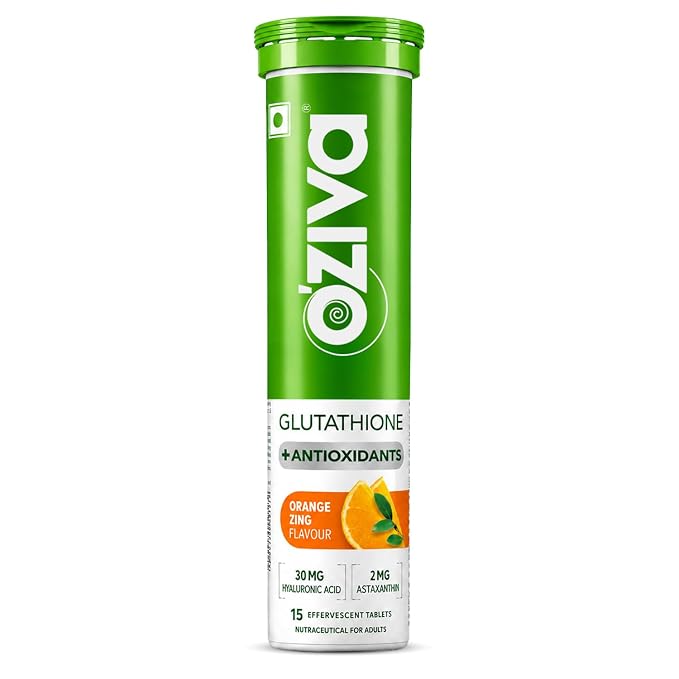
OZiva has built a strong following among younger Indian buyers with clean-label positioning and good product design, and this orange-flavoured glutathione and vitamin C formulation is its entry in the skin supplement category. On presentation, palatability and brand trust within its audience it performs well.
Everything said above about the glutathione evidence applies equally here, because the question is about the molecule rather than the brand. Mixed clinical evidence from small short studies, real bioavailability concerns with oral glutathione, no settled dosing, and the possibility of rebound pigmentation on stopping. A well-designed product does not change the strength of the underlying evidence.
Where this is genuinely a good choice is if you have decided to try the category and want a formulation you will enjoy taking daily for three months, which is what the studies used. Compliance matters, presentation drives compliance, and OZiva is better at that than most. Just pair it with sunscreen, because that is the intervention doing the heavy lifting.
| Specification | Details |
|---|---|
| Actives | Bioactive glutathione with vitamin C |
| Flavour | Orange |
| Positioning | Clean-label, design-led Indian brand |
| Suggested trial length | Twelve weeks, matching the studies |
| Essential companion | Daily sun protection |
Pros
| Cons
|
5. Setu Skin Renew Glutathione Effervescent

Setu takes the skin supplement into an effervescent format, which is a sensible move for a category where people frequently abandon the routine before the twelve weeks the studies used. A drink is easier to sustain than a capsule, and this has a substantial review base.
Its star average is the lowest in this list at just under four, and reading across the category, complaints in this tier typically cluster around taste and around expectations not being met, which is worth separating. Taste is a product issue. Unmet expectations are a category issue, because a supplement with mixed evidence will inevitably disappoint a proportion of buyers who were promised a transformation.
The effervescent format also brings the sodium consideration. Effervescence relies on sodium bicarbonate or carbonate, and a large study of sodium-containing effervescent and soluble medicines found substantially raised odds of hypertension, though it examined prescription drugs rather than supplements. If you have high blood pressure, read the sodium content on the tube.
| Specification | Details |
|---|---|
| Format | Effervescent, dissolved in water |
| Advantage | Easier to sustain for a twelve-week trial |
| Star average | Lowest in this list |
| Sodium note | Effervescence relies on sodium salts |
| Who should check | Anyone with hypertension |
Pros
| Cons
|
6. Miduty Liposomal Vitamin C

This is a premium liposomal vitamin C positioned around antioxidant support and skin, aimed at buyers who want the most advanced-sounding delivery format available in the Indian market. The formulation reasoning is that a lipid envelope helps more vitamin C survive digestion and reach circulation.
The argument has a real basis and a real limitation. Absorption efficiency of ordinary vitamin C declines as the dose increases, so improved delivery genuinely matters at high doses. But the skin evidence we have points to about eighty milligrams a day being the effective oral amount, and at that level standard ascorbic acid is absorbed perfectly well. Better delivery of an amount you were already absorbing does not produce a better skin outcome.
Liposomal is also an unregulated term on Indian listings, so what you get varies by manufacturer. This is a reputable product with a reasonable star average, so if the format appeals and the cost is comfortable, there is nothing wrong with it. Just do not expect the delivery technology to be what changes your skin.
| Specification | Details |
|---|---|
| Claim | Liposomal delivery for improved absorption |
| Where delivery matters | At high doses, not at the 80 mg skin-trial level |
| Regulation | Liposomal is not a regulated term in India |
| Positioning | Premium antioxidant and skin support |
| Review volume | Modest |
Pros
| Cons
|
7. Health Veda Organics Natural Vitamin C 1000mg

A plant-derived thousand milligram formulation for buyers who want both a natural source and a high dose in one tablet, with a modest review base and a reasonable star average from an Indian brand with wide online availability.
For skin specifically, the dose is well past the point where more has been shown to help. The trials in the dermatology review used around eighty milligrams a day over sixteen weeks, so a thousand milligram tablet is providing roughly twelve times an amount that was already sufficient to show an effect. The extra is excreted rather than deposited in your skin.
For women this is a perfectly reasonable purchase if you like the natural positioning. For men, the kidney stone association found at supplemental intakes of a thousand milligrams a day or more is worth weighing, and a lower dose achieves the same skin purpose with a clearer margin.
| Specification | Details |
|---|---|
| Source | Plant-derived natural formulation |
| Dose | 1000 mg, roughly twelve times the skin-trial amount |
| Female buyers | No stone association found in women |
| Male buyers | Consider a lower dose |
| Availability | Wide online presence |
Pros
| Cons
|
8. Himalayan Organics Liposomal Vitamin C
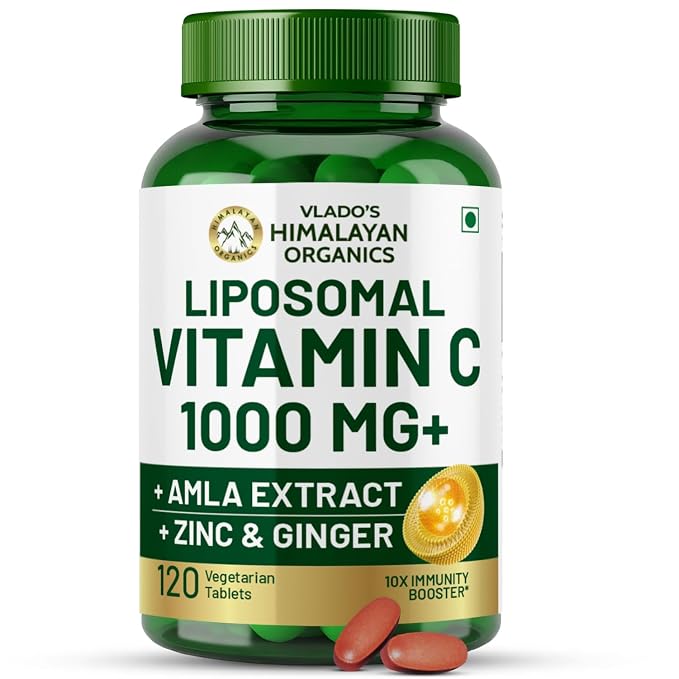
This is the more affordable route into the liposomal segment from an Indian brand with a substantial following in the natural supplements space, and it has a review base large enough to be informative.
Its star average sits just under four, which in a category where most products cluster between four and four point four is a meaningful signal on a sample of this size. Reading across liposomal listings in India, the recurring themes in lower-rated products are taste, capsule size and unmet expectations about visible results, the last of which is a category problem rather than a product defect.
Our overall position on liposomal for skin remains the same regardless of price point. The oral skin evidence sits at around eighty milligrams a day, standard vitamin C is absorbed efficiently at that level, and enhanced delivery therefore solves a problem you did not have. Buy it if you like the brand, not for the technology.
| Specification | Details |
|---|---|
| Positioning | Value liposomal from a natural supplements brand |
| Star average | Just under four |
| Review volume | Substantial for the segment |
| Our view | Liposomal delivery adds little at skin-relevant doses |
| Common complaints in tier | Taste, capsule size, unmet expectations |
Pros
| Cons
|
What Vitamin C Can and Cannot Do for Your Skin
Topical has the evidence, oral has a supporting role
A dermatology systematic review found topical L-ascorbic acid in a low-pH formulation stabilised with vitamin E and ferulic acid to be the most clinically validated route for photoageing and pigmentation. Oral supplementation showed modest benefits for dermal density, texture and wrinkle appearance. If you can only spend on one thing for your skin, spend it on a serum and sunscreen, not on a tablet.
The studied oral dose was about 80 mg, which changes everything about what to buy
In the same review, the oral trials showing improvement used 80 mg a day over 16 weeks, particularly alongside collagen peptides, and photoprotection findings came from complexes containing 40 to 80 mg. ICMR-NIN sets the Indian requirement at 80 mg for men and 65 mg for women. So the effective oral amount for skin is roughly the RDA, and the 1000 mg tablets filling Indian shelves are providing surplus that gets excreted.
Oral vitamin C is not a skin-lightening agent
The review noted that no direct evidence supports oral vitamin C alone for lightening skin pigmentation in people who are not deficient. It is worth saying this plainly because a great deal of Indian marketing implies otherwise. Skin tone is not a health outcome, and no tablet changes the pigment your skin naturally produces.
What vitamin C genuinely does for skin
Two things with real mechanisms. It is an essential cofactor for the enzymes that build collagen, which is why severe deficiency causes the skin and connective tissue failures seen in scurvy. And it functions as an antioxidant, which is the basis for the systemic photoprotection findings where complexes containing 40 to 80 mg increased the minimal erythema dose and improved hydration and elasticity over eight to twelve weeks.
Glutathione, honestly assessed
A dermatology review describes the clinical evidence as mixed: studies showing 250 mg a day reducing melanin index over four weeks and 500 mg improving it over twelve weeks, alongside persistent bioavailability concerns, unresolved optimal dosing, and the possibility of rebound hyperpigmentation after stopping. It concludes caution is warranted before widespread endorsement. Vitamin C is included in these products for a real reason, since it helps maintain glutathione in its active reduced form.
Never consider intravenous glutathione
This is the one hard line in this guide. Intravenous glutathione for skin lightening has been associated with renal dysfunction, thyroid dysfunction and severe dermatologic reactions, and both the US FDA and the Philippine Dermatological Society have issued warnings against its unregulated use. It is widely offered in Indian clinics. No cosmetic goal justifies that risk profile.
Work out which pigmentation problem you actually have
This matters more than any product choice. Post-inflammatory hyperpigmentation, the brown marks left after acne, usually fades on its own over months and responds well to sun protection and topical treatment. Melasma, the symmetrical patches often triggered by pregnancy or hormonal contraception, is chronic, recurs, and needs dermatological management. Sun damage and general dullness respond to sunscreen and topical antioxidants. A tablet is not the primary treatment for any of the three.
Sunscreen outperforms every supplement in this guide
If your concern is dullness, uneven tone, dark patches or early ageing, daily broad-spectrum sunscreen is the single most effective intervention available, and it is the one most Indians skip. Ultraviolet exposure drives both pigmentation and collagen breakdown continuously, so a supplement fighting damage you are still generating daily is working against arithmetic it cannot win.
Give anything three months and photograph the starting point
The oral trials in this field ran sixteen weeks and the glutathione studies ran four to twelve. Skin changes slowly and human memory for colour is unreliable, so take a photograph in consistent light on day one. Most people who conclude a supplement did nothing stopped at six weeks and compared against an impression rather than an image.
Do not stack, because vitamin C is in everything you are taking
Your multivitamin, your glutathione product, your collagen sachet, your effervescent tube and your zinc tablet very likely all contain vitamin C. Adding them up is how men in particular reach the supplemental intakes of 1000 mg a day or more associated with a 19 percent higher kidney stone risk, without ever choosing that dose deliberately.
Where skin problems need a doctor rather than a supplement
A mole or patch that is changing in size, shape or colour. Pigmentation that appears suddenly without sun exposure or inflammation. Melasma that keeps returning. Acne severe enough to be leaving scars rather than marks. All four are dermatology appointments, and months spent working through supplements are months in which a treatable problem continues.
Frequently Asked Questions
Which is the best vitamin C tablet for skin in India?
On the evidence, an inexpensive 500 mg chewable such as Limcee already provides many times the roughly 80 mg a day that oral skin trials used, so it is the rational choice, with the money saved going towards a topical vitamin C serum where the evidence is stronger. If you want a natural formulation, Carbamide Forte with amla is the best-reviewed option.
Does vitamin C really make skin glow?
It supports collagen synthesis and acts as an antioxidant, and complexes containing 40 to 80 mg have been shown to improve hydration and elasticity and increase resistance to sun-induced redness over eight to twelve weeks. What it does not do is lighten your natural pigment, and the effect on overall appearance is modest rather than transformative.
Is vitamin C tablet or serum better for skin?
Serum, on the current evidence. A dermatology review identifies topical L-ascorbic acid in a low-pH formulation with vitamin E and ferulic acid as the most clinically validated approach for photoageing and pigmentation, while oral supplementation showed only modest benefits for texture and wrinkles. Using both is reasonable; choosing only the tablet is the weaker option.
How much vitamin C should I take for skin?
The oral trials that showed benefit used around 80 mg a day over 16 weeks, which is roughly the ICMR-NIN requirement for Indian adults. There is no evidence that 1000 mg does more for skin. A modest daily dose taken consistently for three months is the approach the research actually supports.
Do glutathione and vitamin C tablets lighten skin?
The clinical evidence is mixed and comes from small short studies, with real concerns about how much oral glutathione is absorbed, no settled dosing, and a documented possibility of rebound pigmentation after stopping. A dermatology review concluded that caution is warranted before widespread endorsement. Treat it as an experiment with modest expectations, not a treatment.
Is intravenous glutathione safe for skin whitening?
No, and this is the clearest safety warning in this guide. Intravenous glutathione has been associated with renal dysfunction, thyroid dysfunction and severe skin reactions, and both the US FDA and the Philippine Dermatological Society have warned against its unregulated use. Avoid it regardless of what a clinic tells you.
How long does vitamin C take to show results on skin?
Plan on three months. The oral trials ran sixteen weeks and the glutathione studies four to twelve. Photograph your starting point in consistent lighting, because colour memory is unreliable and most people who conclude nothing happened stopped too early and compared against an impression.
Can vitamin C tablets remove dark spots or pigmentation?
Not on their own, and which kind of pigmentation you have matters. Post-acne marks usually fade over months with sun protection and topical treatment. Melasma is chronic and needs dermatological management. Sun damage responds to sunscreen and topical antioxidants. An oral tablet is a supporting player in all three, never the treatment.
Should I take vitamin C with collagen for skin?
There is a reasonable basis for it. The oral trial showing improvements in dermal density, texture and wrinkle appearance at 80 mg a day did so particularly in combination with collagen peptides, and vitamin C is an essential cofactor for collagen synthesis, so the pairing is biochemically sensible rather than purely commercial.
Are vitamin C tablets safe for daily long-term use on skin?
At sensible doses, yes. The considerations are that men taking 1000 mg a day or more of supplemental vitamin C showed a 19 percent higher kidney stone risk in a large study, that high doses commonly cause diarrhoea and nausea, and that accidental stacking across several products is easy. A single modest daily dose avoids all three.
Does amla vitamin C work better for skin than synthetic?
The ascorbic acid is chemically identical and absorbed identically. Amla additionally supplies polyphenols and flavonoids, which are plausibly beneficial but are not why vitamin C works for skin. Choose amla because you prefer it, not because it is more effective.
What actually works best for skin brightness in India?
Daily broad-spectrum sunscreen first, by a wide margin, because ultraviolet exposure drives both pigmentation and collagen breakdown continuously. Then a topical vitamin C serum. Then, if you wish, a modest oral vitamin C dose. Supplements cannot outpace damage you are still generating every day.
Related Guides
Best Vitamin C Tablet in India | Best Glutathione and Vitamin C Tablets in India | Best Vitamin C Tablets for Immunity in India | Vitamin C Tablet Brands in India | Best Vitamin C Chewable Tablets in India | Best Vitamin C Effervescent Tablets in India | Vitamin C Tablets Price in India | Best Vitamin C Serum in India
Conclusion
The best vitamin C tablets for skin in India are cheaper and smaller than the market wants you to believe. The dermatology evidence puts the effective oral dose at around eighty milligrams a day over sixteen weeks, which is roughly the Indian RDA, so a plain five hundred milligram chewable already supplies a generous surplus. The thousand milligram natural formulations with added botanicals are selling you story and packaging, not a better skin outcome.
Two things deserve to be said without hedging. Oral vitamin C is not a skin-lightening agent, and no direct evidence supports it for lightening pigmentation in people who are not deficient. And the glutathione category, which dominates Indian skin supplement sales, rests on mixed evidence from small short studies with real bioavailability questions and a documented possibility of rebound pigmentation on stopping. Try it if you like, for twelve weeks, with modest expectations.
What we would actually spend on, in order: daily broad-spectrum sunscreen, because ultraviolet exposure drives pigmentation and collagen loss continuously and no supplement outruns that. Then a topical vitamin C serum, which is the clinically validated route. Then an inexpensive oral vitamin C tablet, ideally with a meal so it also helps you absorb iron. And if you have melasma, changing marks or scarring acne, a dermatologist rather than any of the above.
Affiliate Disclosure: As an Amazon Associate, we earn from qualifying purchases. This does not affect the price you pay.