


Muesli and oats are two of the healthiest, most popular breakfast options in India – but they are not the same thing, and people often wonder which is better. Oats are a plain whole grain you cook or soak and top yourself, while muesli is a ready-made mix of grains, dried fruit, nuts and seeds you just add to milk. Both are nutritious, but they differ in convenience, sugar, calories and how much you can customise. This muesli vs oats guide breaks down the real differences and helps you decide which suits your goals – plus the best muesli and oats to buy.
We compare muesli and oats across processing, sugar, protein, fibre, calories and convenience, then recommend top products in each category. Whether you want a quick, tasty ready-to-eat bowl or a plain, low-calorie grain you control completely, this guide will help you choose. The best option often depends on your priorities – and many people happily use both. Let’s break it down.
Table of Contents
- Muesli vs Oats: What’s the Difference?
- Top Muesli & Oats to Buy
- Muesli vs Oats: Full Comparison
- Which Should You Choose?
- Frequently Asked Questions
- Final Verdict
Muesli vs Oats: What’s the Difference?
What is muesli: Muesli is a ready-to-eat mix of whole grains (mainly rolled oats), dried fruit, nuts and seeds, eaten with milk or curd. It is raw or lightly toasted and usually needs no cooking – a true grab-and-go breakfast.
What are oats: Oats are simply the whole oat grain, sold as rolled, quick or steel-cut. Plain oats have nothing added – you cook or soak them and add your own toppings, giving you full control over what goes in.
Convenience: Muesli wins on convenience – just add milk and eat. Oats usually need cooking or overnight soaking, though quick oats are fast. If mornings are rushed, muesli is the easier option.
Sugar and calories: Plain oats have no added sugar and are lower in calories. Muesli can contain added sugar and is more calorie-dense because of its nuts and dried fruit – though a no-added-sugar muesli fixes the sugar concern.
Customisation and nutrition: Oats are a blank canvas you control completely, ideal for strict diets. Muesli comes ready-flavoured with built-in fruit, nuts and seeds, offering more nutrition variety with less effort. Both are high in fibre, and oats are especially rich in cholesterol-lowering beta-glucan.
Top Muesli & Oats to Buy
| Product | Type | Rating | Best For |
|---|---|---|---|
| Kellogg’s Muesli Fruit, Nut & Seeds | Muesli | 4.4 | Best ready-to-eat muesli |
| True Elements High Protein Muesli | Muesli | 4.5 | Best high-protein muesli |
| Quaker Oats (Rolled Oats) | Oats | 4.4 | Best classic oats |
| Bagrry’s Jumbo Rolled Oats (Prebiotic) | Oats | 4.4 | Best premium oats |
| True Elements Rolled Oats (Weight Management) | Oats | 4.4 | Best oats for weight loss |
| Alpino High Protein Chocolate Oats (25%) | Oats | 4.2 | Best high-protein oats |
Best Muesli and Oats to Buy (2026)
1. Kellogg’s Muesli Fruit, Nut & Seeds


Rating: 4.4 ⭐ | Type: Muesli
| Specification | Details |
|---|---|
| Type | Muesli (ready-to-eat) |
| Blend | 12-in-1 grains, fruit, nuts, seeds |
| Prep | Just add milk |
| Additives | No maida, no palm oil |
| Best For | Ready-to-eat muesli |
| Rating | 4.4/5 |
If you want the convenience of muesli, Kellogg’s Fruit, Nut & Seeds is the best ready-to-eat pick. Its 12-in-1 blend of whole grains, real fruits, nuts and seeds – made with no maida and no palm oil – gives you a complete, tasty breakfast in seconds; just add milk. It is the ideal choice for busy mornings when you want nutrition without any cooking or prep. The balanced fruit-and-nut mix delivers fibre, healthy fats and natural sweetness, and the trusted brand ensures consistent quality. For anyone leaning towards muesli in the muesli vs oats debate because of speed and taste, this Kellogg’s option is the easiest, most reliable ready-to-eat bowl you can buy.
👍 Pros
- ✓No cooking – just add milk
- ✓Balanced fruit-nut-seed mix
- ✓Trusted, widely available
- ✓Tasty and convenient
👎 Cons
- ✕Contains some added sugar
- ✕More calorie-dense than plain oats
2. True Elements High Protein Muesli


Rating: 4.5 ⭐ | Type: Muesli
| Specification | Details |
|---|---|
| Type | Muesli (high protein) |
| Protein | About 28g per 100g |
| Flavour | Dark Chocolate |
| Prep | Just add milk |
| Best For | High-protein muesli |
| Rating | 4.5/5 |
For those choosing muesli for its ready nutrition, True Elements High Protein Muesli is the standout, delivering around 28g of protein per 100g – far more than plain oats – with the highest rating here. Built on whole grains with added protein, seeds and real cocoa, it turns a convenient breakfast into a serious protein source, keeping you full for hours. It is ideal for active people who want the grab-and-go ease of muesli without sacrificing protein. True Elements’ clean-label reputation means honest ingredients you can trust. In the muesli vs oats comparison, this is the muesli that beats plain oats on both protein and convenience, making it a top pick for busy, health-focused eaters.
👍 Pros
- ✓Very high protein (about 28g)
- ✓No cooking needed
- ✓Clean-label ingredients
- ✓Highest rating here
👎 Cons
- ✕Premium pricing
- ✕Smaller pack size
3. Quaker Oats (Rolled Oats)

Rating: 4.4 ⭐ | Type: Oats
| Specification | Details |
|---|---|
| Type | Rolled oats (plain) |
| Added Sugar | None (plain) |
| Fibre | Oat beta-glucan |
| Prep | Cook or soak, add toppings |
| Best For | Classic oats |
| Rating | 4.4/5 |
Quaker Oats is the most recognised name in oats, and its rolled oats are the classic, no-fuss choice for the oats side of the debate. Being plain whole-grain oats, they contain no added sugar and are lower in calories than muesli, giving you a blank canvas to build a breakfast exactly how you like – cooked as porridge, soaked overnight, or blended into smoothies. Oats’ beta-glucan fibre supports heart health and keeps you full. Quaker’s reliability and wide availability make it the default oats for millions. For anyone leaning towards oats for maximum control, low sugar and lower calories, Quaker rolled oats are the dependable, trusted classic to start with.
👍 Pros
- ✓No added sugar, low calorie
- ✓Full control over toppings
- ✓Heart-healthy beta-glucan
- ✓Trusted, widely available
👎 Cons
- ✕Needs cooking or soaking
- ✕Plain – you add nutrition yourself
4. Bagrry’s Jumbo Rolled Oats (Prebiotic)
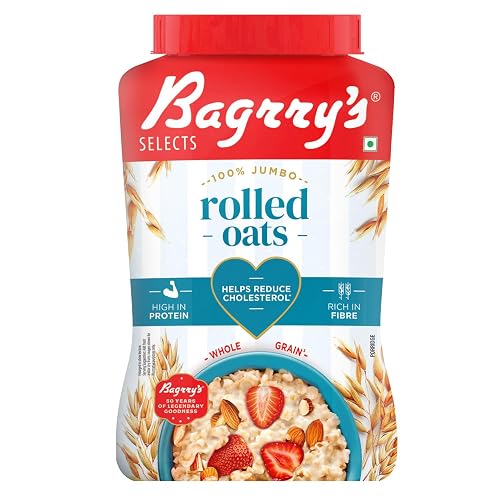
Rating: 4.4 ⭐ | Type: Oats
| Specification | Details |
|---|---|
| Type | Jumbo rolled oats |
| Grains | 100% wholegrain |
| Benefit | Prebiotic, high fibre |
| Pack | 1kg jar |
| Best For | Premium oats |
| Rating | 4.4/5 |
Bagrry’s 100% Jumbo Rolled Oats are the premium oats pick, from a brand that specialises in breakfast grains. The jumbo rolled format gives a heartier, chewier texture than fine oats, and the oats are wholegrain, high in fibre and prebiotic, supporting gut health as well as fullness. Sold in a convenient 1kg jar, they are plain and unsweetened, letting you control exactly what goes into your bowl. Bagrry’s decades of breakfast expertise show in the quality of the grain. For anyone on the oats side of the muesli vs oats debate who wants a superior, wholegrain, prebiotic oat with great texture, Bagrry’s Jumbo Rolled Oats are an excellent, premium choice worth the small step up.
👍 Pros
- ✓Premium jumbo wholegrain oats
- ✓Prebiotic, gut-friendly
- ✓Hearty, chewy texture
- ✓Breakfast-specialist brand
👎 Cons
- ✕Needs cooking or soaking
- ✕Plain – add your own toppings
5. True Elements Rolled Oats (Weight Management)

Rating: 4.4 ⭐ | Type: Oats
| Specification | Details |
|---|---|
| Type | Rolled oats (plain) |
| Added Sugar | None |
| Benefit | Low calorie, high fibre |
| Focus | Weight management |
| Best For | Oats for weight loss |
| Rating | 4.4/5 |
True Elements Rolled Oats are positioned specifically for weight management, making them our top oats pick for anyone dieting. As plain, wholegrain rolled oats with no added sugar, they are naturally low in calories and high in fibre, keeping you full on fewer calories – ideal for a calorie deficit. The clean-label brand ensures quality, unprocessed grain. Being plain, they let you control every topping, so you can keep the whole bowl light and diet-friendly. Oats’ beta-glucan also supports steady energy and heart health. In the muesli vs oats debate, this is the oats choice for weight-loss-focused eaters who want a low-calorie, high-fibre base they fully control. A clean, effective staple for lean eating.
👍 Pros
- ✓Low calorie, high fibre
- ✓No added sugar
- ✓Clean-label quality
- ✓Full control for dieting
👎 Cons
- ✕Needs cooking or soaking
- ✕Plain taste – customise it
6. Alpino High Protein Chocolate Oats (25%)

Rating: 4.2 ⭐ | Type: Oats
| Specification | Details |
|---|---|
| Type | High protein oats |
| Protein | About 25% |
| Flavour | Chocolate |
| Pack | 1kg |
| Best For | High-protein oats |
| Rating | 4.2/5 |
For those who want oats but crave the taste and protein of muesli, Alpino’s 25% High Protein Chocolate Oats bridge the gap. These rolled oats are boosted with protein – around 25% – and a chocolate flavour, giving you the convenience of a tastier oat bowl with far more protein than plain oats. It is a smart middle ground in the muesli vs oats debate: the wholegrain, cook-or-soak flexibility of oats with the protein and flavour that usually draw people to muesli. The 1kg pack offers good value. For anyone who likes oats but wants extra protein and a chocolatey taste without switching fully to muesli, Alpino High Protein Oats are a clever, satisfying choice that combines the best of both.
👍 Pros
- ✓High protein (about 25%)
- ✓Tasty chocolate flavour
- ✓Wholegrain oat base
- ✓Good-value 1kg pack
👎 Cons
- ✕Flavoured – check added sugar
- ✕Less plain than pure oats
Muesli vs Oats: Full Comparison
Here is how muesli and oats compare across the factors that matter most for your breakfast:
| Factor | Muesli | Oats |
|---|---|---|
| What it is | Ready mix: grains + fruit + nuts + seeds | Plain whole grain (rolled/steel-cut) |
| Processing | Minimal (raw or lightly toasted) | Minimal (rolled/steamed) |
| Added sugar | Some contain it; pick 0% added | None (plain oats) |
| Convenience | Ready to eat, just add milk | Needs cooking or soaking |
| Protein | 8-28g per 100g (varies by type) | About 11-13g per 100g (plain) |
| Fibre | Good (grains + fruit + seeds) | High (oat beta-glucan) |
| Calories | Higher (nuts, dried fruit) | Lower (plain) |
| Taste & variety | Ready flavours (choco, fruit, nut) | Plain – you customise |
| Best for | Quick, tasty, ready breakfast | Custom, low-calorie, full control |
Which Should You Choose?
Choose muesli if you want a quick, tasty, ready-to-eat breakfast with built-in fruit, nuts and seeds and no cooking – ideal for busy mornings, and a high-protein muesli can even beat plain oats on protein. Choose oats if you want the lowest-calorie, no-added-sugar, fully customisable option and do not mind a little cooking or soaking – best for strict diets and total control. Neither is universally better: muesli wins on convenience, taste and variety, while oats win on price, low calories, low sugar and flexibility. The smartest approach for many people is to use both – oats on relaxed mornings when you can cook, and muesli when you need a fast, wholesome bowl. Whichever you pick, favour whole grains, keep added sugar low, and mind your portion.
Frequently Asked Questions
Which is better, muesli or oats?
Neither is universally better – it depends on your priorities. Muesli is more convenient and tastier, with ready fruit, nuts and seeds, and high-protein versions can exceed plain oats on protein. Oats are lower in calories, have no added sugar and are fully customisable, but need cooking or soaking. Choose muesli for convenience and taste, oats for control and low calories.
Is muesli or oats better for weight loss?
Plain oats are lower in calories and have no added sugar, giving them an edge for strict weight loss when you control the toppings. However, a no-added-sugar, high-protein muesli also works well and is more convenient. For weight loss, the key is avoiding added sugar and controlling portions – both can succeed, so pick the one you will eat consistently.
Is muesli healthier than oats?
Plain oats are simpler and lower in sugar and calories, which can make them healthier by default. Muesli offers more variety and nutrients from fruit, nuts and seeds, but some contain added sugar and more calories. A no-added-sugar, whole-grain muesli is just as healthy as oats; a sugary one is not. It comes down to the specific product you choose.
Can I eat muesli and oats together?
Yes, mixing muesli and oats is a great idea. You get the fibre and low sugar of plain oats plus the fruit, nuts, seeds and flavour of muesli. Try soaking oats overnight and stirring in a spoon of muesli for crunch, or cooking oats and topping with muesli. It is an easy way to enjoy the benefits of both.
Which has more protein, muesli or oats?
It depends on the type. Plain oats have about 11-13g of protein per 100g, while regular muesli has 8-12g and high-protein muesli offers 20-28g per 100g. So a dedicated high-protein muesli has more protein than plain oats, but plain oats have more than many basic, fruit-heavy muesli. Check the label to compare.
Final Verdict
In the muesli vs oats debate, there is no single winner – only the right choice for you. Muesli is the better pick for convenience, taste and variety, with high-protein options that even out-protein plain oats, making it ideal for busy, flavour-focused mornings. Oats are the better pick for the lowest calories, no added sugar and total customisation, perfect for strict diets and cooking lovers. For products, Kellogg’s and True Elements lead on muesli, while Quaker, Bagrry’s and True Elements offer the best plain oats and Alpino bridges both with high-protein chocolate oats. The smartest move for many is to keep both on hand. Whichever you choose, favour whole grains, keep added sugar low, and enjoy a wholesome start to your day.