



Last Updated: August 2026
Seeing a clump of hair in the shower drain is unnerving, and it is the moment most people start searching for a fix. Rosemary oil for hair fall is the search almost everyone lands on, and there is a reasonable basis for it: rosemary supports scalp circulation, has anti-inflammatory and antimicrobial properties, and a well-known 2015 clinical trial found it comparable to 2% minoxidil over six months for pattern hair loss.
What matters is using it for the right kind of shedding. Losing fifty to a hundred strands a day is normal. Losing far more, suddenly, after an illness, a crash diet, pregnancy or a period of stress is usually telogen effluvium, and it needs the underlying cause fixed as much as it needs an oil. This guide picks seven genuine options on Amazon India, explains how to apply them so the scalp actually benefits, and is honest about the point where oil stops being the answer.
Quick Comparison Table
| Product | Best For | Rating | Buy |
|---|---|---|---|
| Botanic Hearth Rosemary Oil with Biotin | Best Overall for Hair Fall | 4.1 ⭐ (16,400+) | Check Price |
| Brillare 20% Rosemary Oil Shots | Strongest Formulation | 4.7 ⭐ (1,900+) | Check Price |
| Dabur Vatika Rosemary Hair Growth Oil | Best Ayurvedic Option | 4.3 ⭐ (7,000+) | Check Price |
| Pilgrim Spanish Rosemary Anti-Hairfall Oil | Best Lightweight Treatment | 4.1 ⭐ (1,000+) | Check Price |
| Soulflower Rosemary Essential Oil | Best Pure Oil for Custom Blends | 4.2 ⭐ (13,900+) | Check Price |
| Avimee Herbal Rosemary Oil | Best Herbal Blend | 4.1 ⭐ (1,400+) | Check Price |
| Mamaearth Rosemary & Methi Dana Hair Oil | Best Gentle Everyday Option | 4.0 ⭐ (1,000+) | Check Price |
Top 7 Rosemary Oils for Hair Fall Reviewed
1. Botanic Hearth Rosemary Oil with Biotin


A large part of what looks like hair fall is actually breakage, and this is the oil that addresses both sides of the problem. Rosemary works on the scalp and follicle, while biotin, jojoba and castor oil condition the shaft so strands stop snapping mid-length when you comb or tie them. In a 198 ml bottle it is also generous enough to use two or three times a week without rationing.
The formula is alcohol free, which matters because a dry, tight scalp sheds more, and it applies directly with no dilution step. Section the hair, work it along the scalp for a few minutes, leave it for at least an hour and wash with a mild shampoo. Expect the first visible change to be less hair on your comb rather than new growth; density takes months. The one gap is that the brand does not publish how much rosemary the blend contains.
| Specification | Details |
|---|---|
| Type | Rosemary blend hair oil |
| Bottle size | 198 ml |
| Key ingredients | Rosemary, biotin, jojoba, castor |
| Formulation | Alcohol free |
| Targets | Hair fall, breakage, thinning |
| Application | Direct scalp application, no mixing |
Pros
| Cons
|
2. Brillare 20% Rosemary Oil Shots

If your shedding is persistent and you want the most concentrated option that is still ready to apply, this is it. Brillare states a 20% rosemary concentration on the pack, which puts it far above the token amounts in most mass-market oils, and it holds the highest average rating of any product in this roundup. The base is deliberately light and non-greasy, so it can be used on non-wash days without flattening the hair.
For hair fall specifically, the value of a stronger formula is that you get a meaningful dose of the active in a shorter contact time. Two applications a week is a sensible starting point; increase only if your scalp stays comfortable. As with any concentrated product, patch test first, because an irritated scalp sheds more, not less. Pair it with a gentle shampoo and avoid tight hairstyles while you are actively shedding.
| Specification | Details |
|---|---|
| Type | High-concentration rosemary oil |
| Rosemary content | 20% as stated by the brand |
| Texture | Lightweight, non-greasy |
| Targets | Hair fall, thickness, growth rate |
| Suitable for | Men and women |
| Frequency | Two to three times a week |
Pros
| Cons
|
3. Dabur Vatika Rosemary Hair Growth Oil

Traditional Indian hair fall remedies were built around exactly the herbs in this bottle: bhringraj, brahmi, methi, amla and hibiscus, here combined with rosemary in a coconut base. For shedding linked to dryness, rough handling and a neglected scalp, that combination does more than rosemary alone, because it addresses the nourishment side as well as circulation.
Dabur states there is no mineral oil in the formula and that it was co-created with a dermatologist, both meaningful in a market where cheap oils are mostly mineral oil with fragrance. It is richest as an overnight treatment, so oil in the evening, tie the hair loosely and wash in the morning. If your hair fall is driven by pattern baldness rather than damage, this will support the scalp but should sit alongside proper treatment rather than replace it.
| Specification | Details |
|---|---|
| Type | Ayurvedic rosemary hair oil |
| Bottle size | 100 ml |
| Key herbs | Rosemary, hibiscus, brahmi, bhringraj, methi, amla |
| Base | Coconut oil |
| Free from | Mineral oil |
| Best for | Dryness-related shedding |
Pros
| Cons
|
4. Pilgrim Spanish Rosemary Anti-Hairfall Oil

Pilgrim built this specifically around hair fall rather than general nourishment, pairing Spanish rosemary with supporting actives in a light, scalp-focused formula. It feels closer to a treatment than a traditional oil, which is exactly what people with oily scalps need, because a heavy oil left on an already greasy scalp can worsen build-up and make shedding look worse.
Apply it in sections along the scalp, massage for a few minutes to help circulation, and wash it out after an hour or two. The dropper-style application is far cleaner than pouring from a wide-mouth bottle, and the packaging is one of the better designed in this category, which genuinely affects how often a product gets used. Its review base is smaller than the bestsellers, so treat it as a strong newer entrant rather than a proven decade-old staple.
| Specification | Details |
|---|---|
| Type | Anti-hairfall rosemary oil |
| Key ingredient | Spanish rosemary with supporting actives |
| Texture | Light, non-greasy |
| Application | Scalp sections with applicator |
| Contact time | One to two hours |
| Best for | Oily scalps and fine hair |
Pros
| Cons
|
5. Soulflower Rosemary Essential Oil

When shedding is stubborn, the advantage of a pure essential oil is that you control the dose. Soulflower supplies a 100% pure, steam-distilled, Ecocert certified organic oil that you blend into a carrier at a strength you choose, typically three to five drops per teaspoon. That lets you keep the concentration consistent instead of guessing what is inside a branded blend.
For hair fall, a practical routine is rosemary blended into coconut or almond oil twice a week, massaged in for five minutes and left for an hour before washing. Because rosemary is concentrated, never apply it undiluted onto an already irritated scalp, and stop if you see redness. The 30 ml bottle lasts a long time at correct dilution, so the cost per session is low despite the bottle looking small.
| Specification | Details |
|---|---|
| Type | 100% pure essential oil |
| Bottle size | 30 ml |
| Extraction | Steam distilled |
| Certification | Ecocert certified organic |
| Dilution | Three to five drops per teaspoon of carrier |
| Best for | People who want dose control |
Pros
| Cons
|
6. Avimee Herbal Rosemary Oil
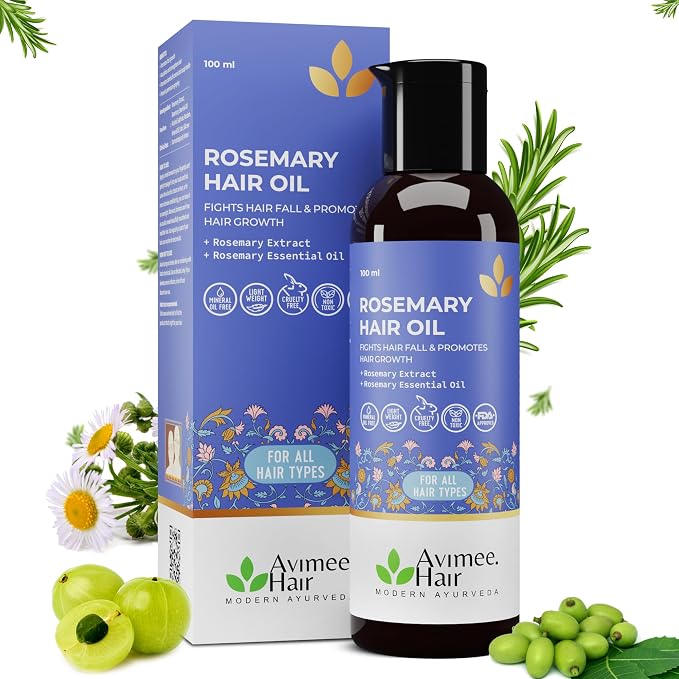
Avimee Herbal made its name with ayurvedic hair fall formulations, and its rosemary oil brings that background to the trending ingredient. It is positioned squarely at hair fall and regrowth rather than styling or shine, and it sits between the heavy traditional oils and the very light modern treatments in texture, which makes it workable for most hair types.
Use it the way you would any herbal oil: warm slightly, apply along the scalp in sections, massage, and leave it on for at least an hour or overnight. Users with dry, rough hair tend to get the most from this style of formulation, because the carrier oils do real work on the lengths while the rosemary works on the scalp. As with most Indian herbal brands, the exact rosemary concentration is not published.
| Specification | Details |
|---|---|
| Type | Herbal rosemary hair oil |
| Focus | Hair fall and regrowth support |
| Texture | Medium weight |
| Application | Scalp massage, leave on or overnight |
| Suitable for | Men and women |
| Brand background | Ayurvedic hair care specialist |
Pros
| Cons
|
7. Mamaearth Rosemary & Methi Dana Hair Oil

Methi dana is one of the oldest home remedies for hair fall in India, and pairing it with rosemary gives this oil a sensible two-part logic: rosemary for scalp circulation, fenugreek for follicle strength and shine. Mamaearth keeps the formulation gentle and the fragrance mild, which makes it easy to use on a weekday evening without planning around it.
It is the right choice if your shedding is mild and you mostly need a consistent routine rather than an intensive treatment, or if previous oils have irritated your scalp. Massage it in, leave it for an hour or two and wash out. Because it is deliberately gentle, do not expect dramatic change in the first month; give it a full three months of twice-weekly use before you judge whether it is working for you.
| Specification | Details |
|---|---|
| Type | Rosemary and fenugreek hair oil |
| Key ingredients | Rosemary, methi dana |
| Texture | Light to medium |
| Scent | Mild |
| Frequency | Two to three times a week |
| Best for | Mild shedding and sensitive scalps |
Pros
| Cons
|
How to Choose the Best Rosemary Oil for Hair Fall
First work out what kind of hair fall you have
Losing fifty to a hundred strands a day is normal. Sudden heavy shedding two to three months after an illness, surgery, crash diet, pregnancy or major stress is usually telogen effluvium and it typically recovers once the trigger is resolved. Gradual thinning at the crown or a receding hairline is pattern hair loss. Patchy round bald spots need a dermatologist, not an oil.
Match the format to your scalp type
Oily scalps do better with lightweight, scalp-focused oils applied for an hour or two. Dry, rough hair benefits from a richer ayurvedic blend left on overnight. Applying a heavy oil to an oily, flaky scalp and leaving it for a day is a reliable way to make shedding and dandruff worse rather than better.
Prefer a stated concentration where you can get one
Brands that print 10% or 20% on the pack let you compare products meaningfully. Where nothing is stated, a pure essential oil diluted by you at three to five drops per teaspoon of carrier gives you the same certainty. Anything vaguely described as enriched with rosemary is probably carrying very little of it.
Massage properly, because the technique matters
Use fingertips rather than nails, work in small circles across the whole scalp for three to five minutes, and pay attention to the areas where you see thinning. The mechanical stimulation improves blood flow on its own, which is part of why oiling helps at all. Aggressive scrubbing, on the other hand, breaks fragile hair.
Be gentle with wet hair and hairstyles
Most people lose more hair to handling than to any scalp condition. Do not comb wet hair with a fine-tooth comb, avoid tight ponytails and buns while you are shedding, use a microfibre towel instead of rubbing with a bath towel and keep heat styling to a minimum until the shedding settles.
Fix the inputs an oil cannot reach
Iron deficiency, low vitamin D, thyroid disorders, PCOS, protein-poor diets and rapid weight loss are among the most common causes of hair fall in India, and no topical oil corrects any of them. If your shedding is heavy or persistent, get a blood test before spending months on products.
Use it consistently for at least three months
Hair grows in cycles, so any real improvement takes a full cycle to show. Two to three applications a week for twelve weeks is the honest minimum test. Track it with a monthly photograph of the same parting in the same light, and count the hair you collect on wash day rather than judging by feel.
Know when to stop and see a dermatologist
Sudden heavy loss, patchy bald spots, a visibly inflamed or painful scalp, or shedding alongside fatigue, weight change or irregular periods all warrant medical attention. Rosemary oil is a low-risk supportive step, not a treatment for medical hair loss, and delaying diagnosis costs you follicles you cannot get back.
Frequently Asked Questions (2026)
Does rosemary oil actually stop hair fall?
It can reduce shedding linked to poor scalp circulation, dryness and mild follicle inflammation, and a 2015 clinical trial found it comparable to 2% minoxidil for pattern hair loss over six months. It cannot stop hair fall caused by iron or vitamin D deficiency, thyroid problems, PCOS or a recent illness, which need to be treated at the source.
How long does rosemary oil take to reduce hair fall?
Most people notice less hair on the comb and in the shower within six to eight weeks of consistent use. Visible density improvements take three to six months because hair grows roughly one centimetre a month and follicles need a full cycle to respond. Judge it at the three-month mark, not after two weeks.
How often should I apply rosemary oil for hair fall?
Two to three times a week is ideal. More frequent oiling does not speed anything up and can leave the scalp greasy, which encourages build-up and flaking. Massage for three to five minutes, leave it on for at least an hour or overnight, and wash out with a mild shampoo.
Can rosemary oil cause more hair fall initially?
A small number of people notice slightly more shedding in the first couple of weeks, usually because massage dislodges hairs that were already in the resting phase. That settles quickly. Persistent increased shedding, itching or redness means the product is irritating your scalp and you should stop using it.
Should I use rosemary oil or minoxidil for hair fall?
Minoxidil is a proven medical treatment with far more clinical evidence behind it, especially for pattern hair loss. Rosemary oil is a low-risk supportive option with one encouraging trial. Many people use rosemary oil alongside medical treatment rather than instead of it, and that is a conversation worth having with a dermatologist.
Which carrier oil is best with rosemary for hair fall?
Coconut oil is the best-evidenced carrier for reducing protein loss from the hair shaft and suits most Indian hair. Almond and jojoba are lighter and better for fine or oily-prone hair. Castor is thick and best used in a small proportion. Use three to five drops of rosemary essential oil per teaspoon of carrier.
Can rosemary oil regrow hair on bald patches?
Round, coin-sized bald patches usually indicate alopecia areata, an autoimmune condition that needs medical treatment, and oil will not resolve it. Rosemary oil is better suited to diffuse thinning and mild pattern loss where follicles are still active. See a dermatologist promptly for any patchy or rapidly progressing loss.
Related Guides
Best Rosemary Oil for Hair Growth in India · Best Rosemary Hair Oil in India · Best Rosemary Oil Brand in India · Best Scalp Massager for Hair Growth
Conclusion
For most people the best rosemary oil for hair fall in India is Botanic Hearth, because it works on the two things that make hair look thinner at once: shedding from the scalp and breakage along the shaft. If you want maximum strength in a ready-to-use format, Brillare 20% Rosemary Oil Shots is the only widely available option that tells you exactly how concentrated it is.
For dryness-driven shedding, Dabur Vatika remains the most comforting overnight treatment, and Pilgrim is the pick for oily scalps that cannot tolerate heavy oils. Use whichever you choose two or three times a week for at least three months, be gentle with wet hair in the meantime, and get a blood test if the shedding is heavy or does not settle.
Affiliate Disclosure: This post contains Amazon affiliate links. If you buy through them, we may earn a small commission at no extra cost to you.